
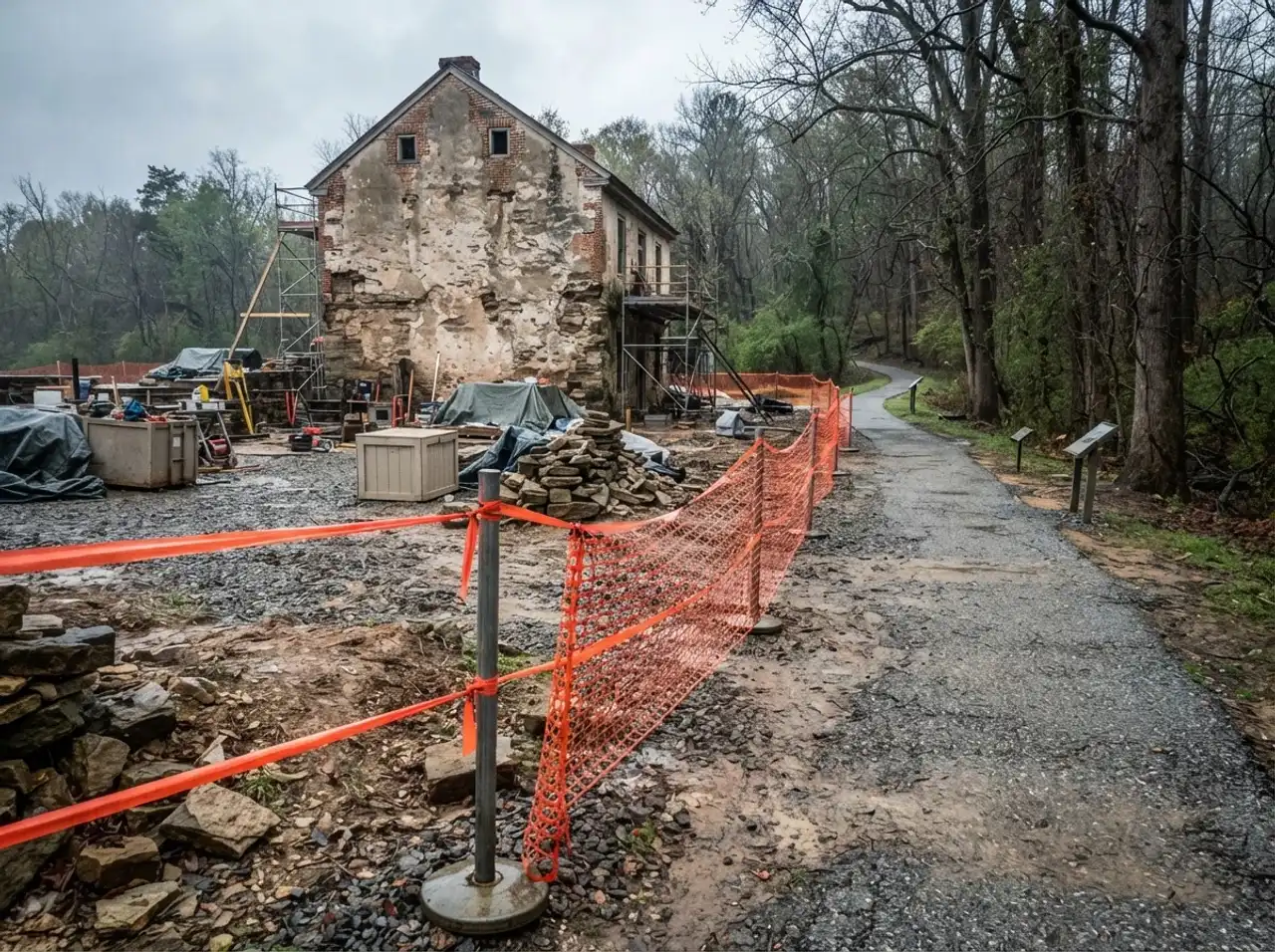
03 / High-Risk Public Environment Execution
The park does not close. The ceremony does not stop. The road stays open.
Hazard tree removal on active federal sites with visitors, mourners and traffic present.
Working a live site is a different job
An empty site lets you fell a tree and clean up later. A live site does not. When visitors are walking through, when a burial is scheduled at 10, when 1,200 cars a day use the road under the canopy, the drop zone is the whole job. Cordon management, visitor flow, traffic control, and ceremony scheduling are not side tasks. They are the work that makes the tree work possible.
We plan the cordon first and the cuts second. We sequence around the agency schedule, the traffic peaks, and the events that cannot move. When a drop is not possible because the ground is occupied, we rig the tree apart in sections and lower every piece to a controlled landing zone. At close of work, we restore the ground so the site is presentable the next morning. The public never sees a job site. They see a park.
What We Deliver
Six hazard tree removal capabilities that hold on an active public site
Cordon and closure operations
Before a saw runs, we establish the drop zone and the exclusion area. That means physical barriers, signage, and a spotter whose only job is keeping people out of the space where material could fall. On a live site the cordon is the job. If it fails, everything behind it fails.
Traffic control and lane closure
When the hazard tree leans over a road, we close the lane, not the highway. We coordinate with the agency to time closures around traffic peaks, flag the detour, and reopen the moment the last piece is on the ground. The road stays open because we narrowed it, not because we ignored it.
Visitor and staff flow coordination
People do not stop moving because a tree is being removed. We map the pedestrian routes that cross the work area, redirect them around the cordon, and post staff at the junctions where someone could walk into the drop zone. The site keeps functioning. The path just moves.
Ceremony and burial schedule integration
At a national cemetery, a burial is a fixed event with a grieving family and a time certain. We sequence our work around the schedule, not the other way around. If a service is at 10, we are clear and restored by 9. The ground is presentable before the family arrives and stays that way after they leave.
Sectional dismantling and advanced rigging
When a drop is not possible because the ground below is occupied, we take the tree apart in rigged pieces. Each section is cut, suspended, and lowered to a controlled landing zone. Nothing falls free. The rigging plan is driven by what is underneath the tree, not by what is fastest.
Daily site restoration
At close of work each day, the ground has to look like a park, not a job site. We process slash, remove debris, rake the area, and restore the surface so visitors the next morning see no evidence of the work except the missing tree. The site is presentable because we made it presentable, not because we left early.
The Hardest Problem in This Lane
Guilford Courthouse National Military Park
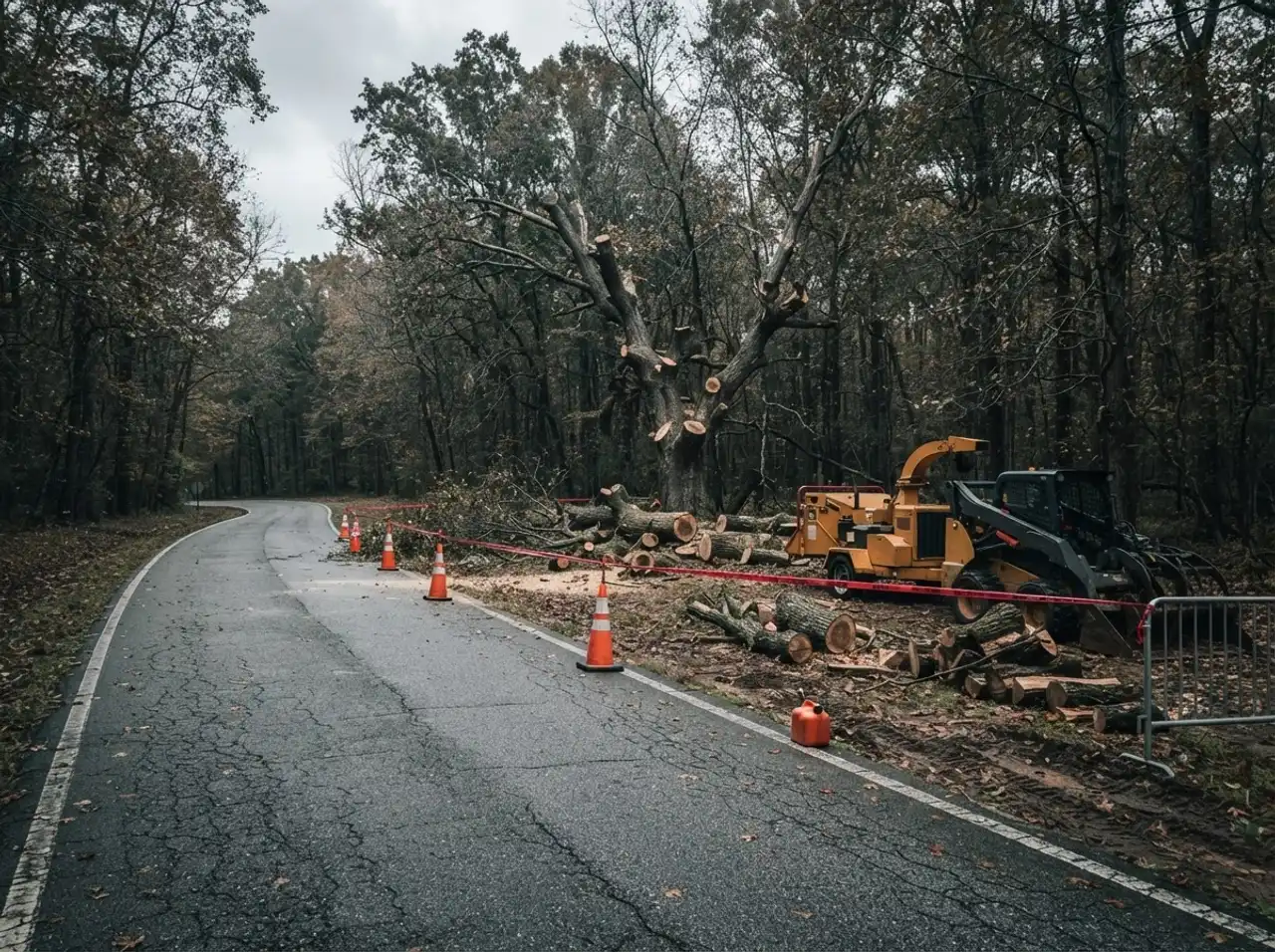
More than 600 hazard trees and 3,600 tons of fuel load stood across Guilford Courthouse National Military Park, a site that draws 1,200 daily visitors. The trees leaned over tour roads, walking paths, and historic earthworks. The park could not close. The work had to happen around the public.
We completed the removal across a 15-day performance window with zero site closure. Cordons moved with the work. Traffic control narrowed lanes, not the park. Every tree that could not be felled into an open area was rigged apart in sections and lowered to a controlled landing zone. At close of each day, the ground was restored.
Zero closure on this project meant 1,200 visitors a day kept walking the battlefield while 600 hazard trees came down around them. That is what the record shows for this site.
Where This Applies
Federal land where the public does not leave
National Military Parks and Historic Sites
See the federal record for this market.National Cemeteries
See the federal record for this market.Corps of Engineers Campgrounds and Recreation Areas
See the federal record for this market.Public Highway Corridors
See the federal record for this market.Next Step
When the site cannot close, the plan has to hold
Download the capability statement for high-risk public environment execution on federal land. The full capability statement, past performance summary, and federal registration data are available as a single document. For teaming opportunities, see how we work with partners.
Federal Registration
Ready to mobilize
| Field | Value |
|---|---|
| UEI | GZ3XMZPPKA59 |
| CAGE | 9NKZ6 |
| Primary NAICS | 561730 |
| Additional NAICS | 115310 and 113310 |
| PSC | F014 S208 F018 |
| SAM.gov Status | Active |
The Arborist is a Service-Disabled Veteran-Owned Small Business serving federally managed land across the United States.