
Our Story
How a single discipline became a federal prime.
The discipline came first
Brennen Manns served as a sniper section leader in the United States Army from June 2014 to February 2019. The work trained a specific set of habits: identify the target, calculate the variables, determine the trajectory, operate inside a constrained window, and account for everything downrange before anything happens.
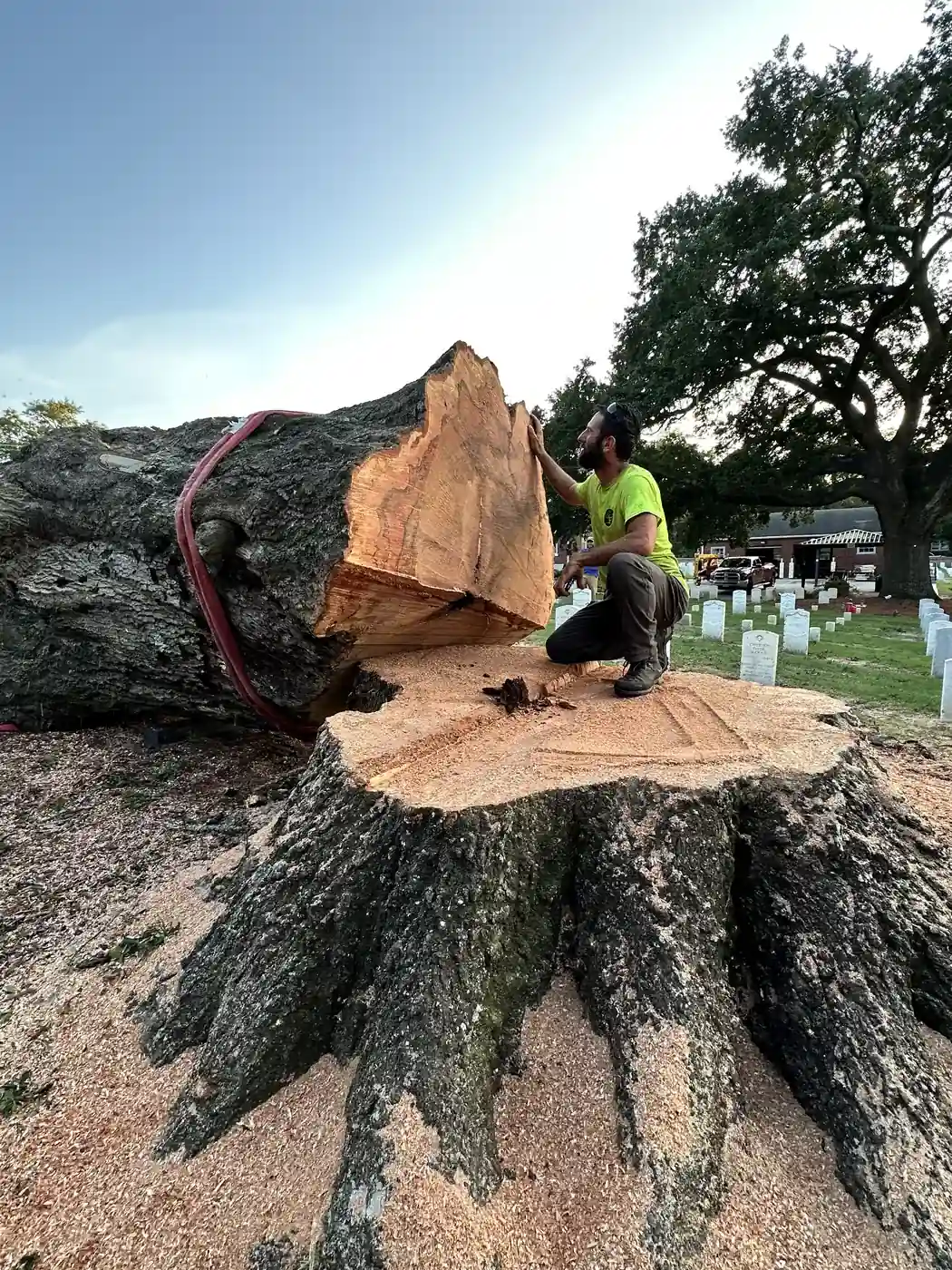
That is also a description of removing a hazard tree over an occupied visitor entrance. The tree is the target. The piece weight and the rigging angle are the load and the trajectory. The closure window is the constraint. The visitor center, the headstone row, the highway lane, the unexcavated earthwork, all of it is downrange, and all of it has to be accounted for before the first cut.
The Arborist was built on that transfer. Not on a general tree service that later discovered federal work.
Structured as a federal prime from day one
Most firms performing on federal land arrived there sideways. They built a residential or commercial book of business, then chased a federal contract when the commercial market slowed, and learned federal compliance as they went.
The Arborist started at the other end. The company was registered, credentialed and structured as a federal prime contractor before it took its first award, because the requirements of federal work are not a layer you add later. Company-level ISA Board Certified Master Arborist supervision, ANSI A300 and ANSI Z133 compliance, TRAQ risk assessment on every tree, and documented job hazard assessment are not upgrades. On federal land they are the entry condition.
That decision cost time at the start. It is the reason the firm performs as a prime rather than a subcontractor today.
What the record shows
Since April 2024, The Arborist has delivered 27+ contract actions as a prime contractor across four federal agencies: the National Park Service, the National Cemetery Administration, the U.S. Army Corps of Engineers, and the USDA Forest Service.
The work has run across 16+ federal sites in 11+ states. National monuments, Civil War battlefields, national cemeteries, recreation areas and wildland urban interface terrain. 1,205+ hazard trees removed. 413+ trees pruned to ANSI A300 standard. 3,920+ tons of fuel load eliminated.
Zero damage incidents.
That last number is the one that matters. Every other figure describes volume. That one describes whether the firm can be trusted on ground that cannot be replaced.
Where it goes from here
The firm holds two active Blanket Purchase Agreements and performs across five operational environments, from post-disaster mitigation to precision work inside archaeological zones.
The model has not changed. A small crew, credentialed supervision, and a refusal to take work the firm cannot execute to standard. Growth is measured in the agencies that call back, not in headcount.
Next Step
Take the next step
Download the capability statement for a full summary of capabilities, past performance, and federal registration data.