
Federal Infrastructure Risk Reduction
Some trees are not a maintenance problem. They are a liability.
Federal hazard tree removal on land that cannot shut down. 27+ contract actions as prime. Zero damage incidents.
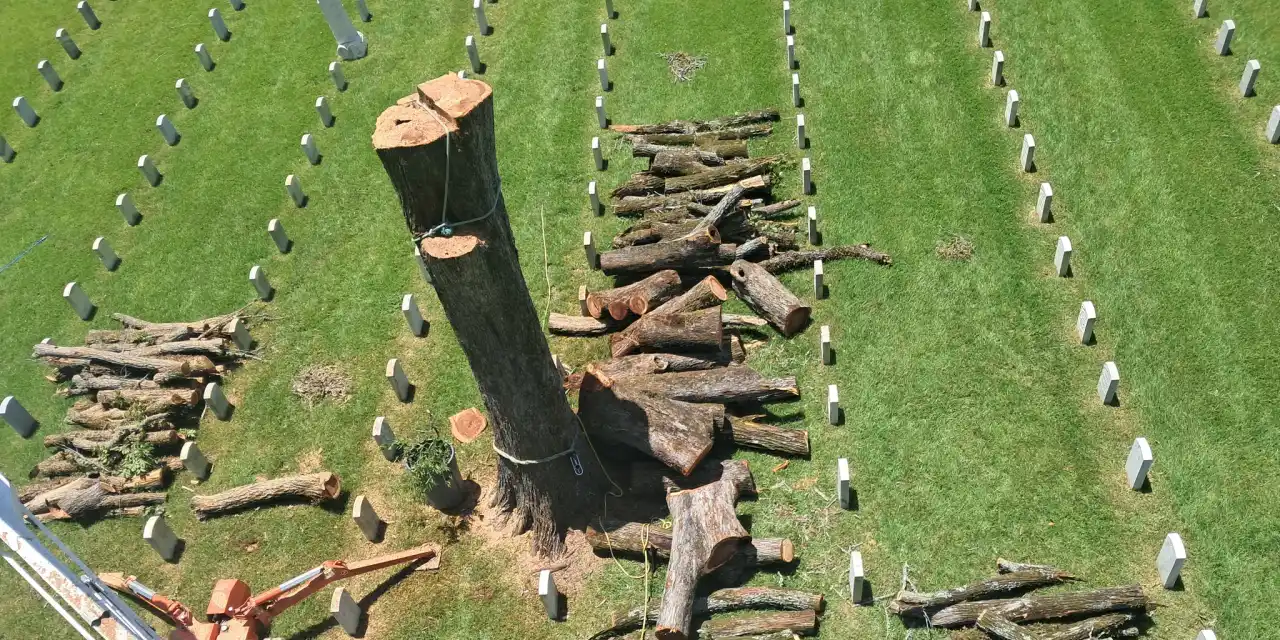
A hazard tree on federal land is not a landscaping item. It is an open liability sitting over visitors, headstones, highways and irreplaceable cultural resources. Most contractors will not take it. We do.
Portfolio figures as of September 2026.
Five Capability Lanes
Federal hazard tree removal across five operational environments
Disaster-Driven Risk Mitigation
We mobilize within 24 hours of a federal call to remove hazard trees from storm-damaged land. Our crews work under emergency conditions where the site cannot close and the risk cannot wait.
02Wildfire and Fuel Load Management
We reduce fuel loads on federal wildland-urban interface terrain before fire season. Hand-thinning, chipping, and controlled debris removal protect adjacent communities and infrastructure.
03High-Risk Public Environment Execution
We remove hazard trees over cemeteries, roadways, and cultural resources where public access must continue. Rigging, exclusion zones, and sequencing keep visitors safe while work proceeds.
04Precision Ops in Constrained Environments
We operate on steep ravines, narrow trails, and sites with limited staging. Technical rigging and crane-assisted removals let us work where standard equipment cannot reach.
05Environmental and Ecosystem Integration
We protect cultural resources, suppress invasive species, and prune to ANSI A300 standard. Compliance with environmental requirements is built into the method, not bolted on.
Where We Work
Federal land across 11+ states
We hold active contracts with 4+ federal agencies across 16+ sites. Every project sits on federally managed land where public access, cultural resources, or critical infrastructure cannot be interrupted.
Our work spans national recreation areas, Army Corps reservoirs, national cemeteries, and national forests. The common thread is risk that other contractors will not accept.
| Agency | Dept |
|---|---|
| NPSNational Park Service | DOI |
| USACEU.S. Army Corps of Engineers | DOD |
| NCANational Cemetery Administration | VA |
| USFSUSDA Forest Service | USDA |
The Hardest Job
Chickasaw National Recreation Area
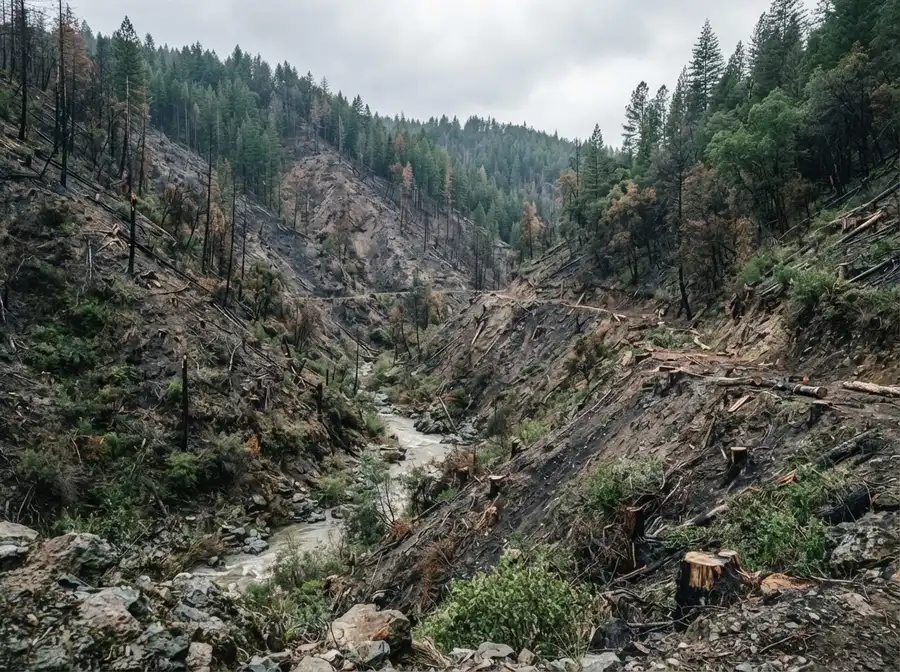
300 hazard trees stood across 84 acres of 70-degree ravine slopes, forming a wildfire pathway toward the town of Sulphur. Over $1.1 billion in combined federal and municipal assets sat downslope, along with 5,000 residents.
We completed the removal in 17 days, working ravine terrain that ruled out standard equipment. Every tree was rigged and lowered, never dropped.
The removed timber was donated to the Chickasaw Nation Firewood Program, supporting more than 200 households in the surrounding community.
They did not buy tree removal. They bought certainty that nobody got hurt.
Brennen Manns / Founder and Owner-Operator
Why Federal Buyers Choose Us
Four commitments that hold on every project
Work is supervised by an ISA Board Certified Master Arborist on staff, a credential held by fewer than 1,300 professionals worldwide.
We work where the site cannot close.
Cemeteries, recreation areas, and highways stay operational during our work. We stage, execute, and clear so the public sees minimal disruption, or we work inside the closure window the agency can give us.
We remove the trees other contractors refuse.
Hazard trees over headstones, roadways, and cultural resources require rigging and risk controls that most tree services are not equipped or insured to attempt. That is the work we take.
We mobilize inside 24 hours.
Storm response and wildfire mitigation do not wait for a scheduling window. Our team and equipment are staged to reach federal land within a day of the call.
We leave the site better than we found it.
Removed timber is donated to community programs, debris is processed on site, and the ground is restored. Environmental compliance is built into the method, not bolted on.
Self-Performance
We own the crews and the equipment
This firm puts its own crews and equipment on site. It does not win a contract and then call local companies to do the work. The arborists who plan the job are the arborists who execute it. 27+ contract actions in the portfolio were delivered as prime, with the same crew standard on every site.
Self-performance is what makes the record clean. The same credentialed supervision that writes the job hazard assessment and the TRAQ evaluation is on the ground running the cordon, the rigging, and the crane. There is no handoff between a firm that bids the work and a different firm that performs it.
When we bring a subcontractor onto one of our awards, it is for a defined specialty scope under our supervision. The quality standard, the reporting, and the record stay with us. Teaming runs both directions.
2026: first unrestricted competitive win - Dinosaur National Monument, no set-aside.
Federal Registration
Ready to award
SAM.gov registration is active and current.
Corporate Information
| UEI | GZ3XMZPPKA59 |
| CAGE | 9NKZ6 |
| Primary NAICS | 561730 |
| Additional NAICS | 115310, 113310 |
| PSC | F014, S208, F018 |
| SAM.gov Status | Active |
The Arborist is a Service-Disabled Veteran-Owned Small Business serving federally managed land across the United States.
Frequently Asked Questions
Common questions from federal buyers and prime contractors
Meet the owner-operator behind the firm, or review the full federal past performance record.
Next Step
Download the capability statement
The full capability statement, past performance summary, and federal registration data are available as a single document for your contracting team.